
Spotting Fake and Inactive OnlyFans Pages Safely
OnlyFans hosts millions of creator accounts, and not all are genuine. Some pages are copied, some are abandoned, and some exist only to collect a subscription fee before disappearing. This article explains how to spot fake, inactive, or duplicated pages using signals you can see without paying anything. That way your money reaches a real creator.
Most people find pages through search engines, social posts, or ranking sites. The platform itself offers no public directory. That gap is where bad actors operate. They clone photos and set low prices to look legitimate.
The good news is that fakes leave traces. Inconsistent links, recycled media, and irregular posting times are visible before you subscribe. Reading those traces takes a few minutes per profile.
Why fake pages exist
A fake page costs almost nothing to build. A scammer downloads photos from a public feed, writes a short bio, and sets a price. When the account stops earning, the operator abandons it.
There is also a grey area. Some pages are managed by agencies rather than the creator, and the person shown may post rarely. These pages are not always fraudulent, but they often fail to deliver what the subscription implies. Ranking sites exist partly to filter this noise for readers.
Cost expectations matter here. A paid subscription runs from $4.99 at the minimum to $49.99 at the maximum. Most paid pages sit between $4.99 and $15, and averages land around $5 to $10.
- Month one: subscription cost, typically $5 to $10, plus any unlocks you choose.
- Month two onwards: auto-renew at the same rate unless the price changes.
- Tips: optional, and the creator keeps 80% while the platform takes 20%.
- Pay-per-view messages: separate from the subscription and charged individually.
- Hidden cost of a bad page: the fee is spent and nothing arrives.

Red flags checklist
Before paying, open the profile and read it slowly. A wall of vague sentences with no specific details is a common pattern on copied pages. So is a bio that mentions no schedule and no consistent theme.
Check whether the media looks like a batch uploaded in one session. Timestamps that cluster within minutes, followed by weeks of silence, suggest the gallery was imported. Reverse image search can confirm whether the same photos appear elsewhere.
Links are the clearest tell. A creator usually repeats the same handle across platforms. If the profile links to a social account with a different name or no posts, treat the page as unverified.
- Mismatched handles between the page and linked social accounts.
- Photos that appear on multiple profiles or stock image sites.
- A bio with no schedule, no niche, and no verifiable detail.
- Prices far below the $4.99 minimum outside a first-month promotion.
- No response to a simple, polite question sent before subscribing.
- Comment sections that look copied word for word across pages.
Practical tip: send one short question before you pay. A real creator or their team usually replies within a day. A copied page almost never does, and that silence costs you nothing to test.
Activity signals
Activity is the strongest free indicator available. A page that posts consistently, replies to messages, and updates its description is far more likely to be genuine than one with a full gallery and no recent movement.
Look at the gap between the newest post and today. A few days is normal. Several weeks with no upload, while the subscription stays active, means you are paying for an archive.
Engagement is harder to read because counts are limited, but patterns still show. A page with steady posts and almost no interaction may be a mirror of another account. Sudden bursts followed by long silences often belong to an operator running several profiles.
- Posting gaps longer than two or three weeks on an active paid page.
- Timestamps clustered in one day, then nothing for a month.
- Captions copied from other profiles or reused across posts.
- No replies to messages, even simple ones.
- Profile description that never changes over several months.
- Media quality that shifts sharply between posts.
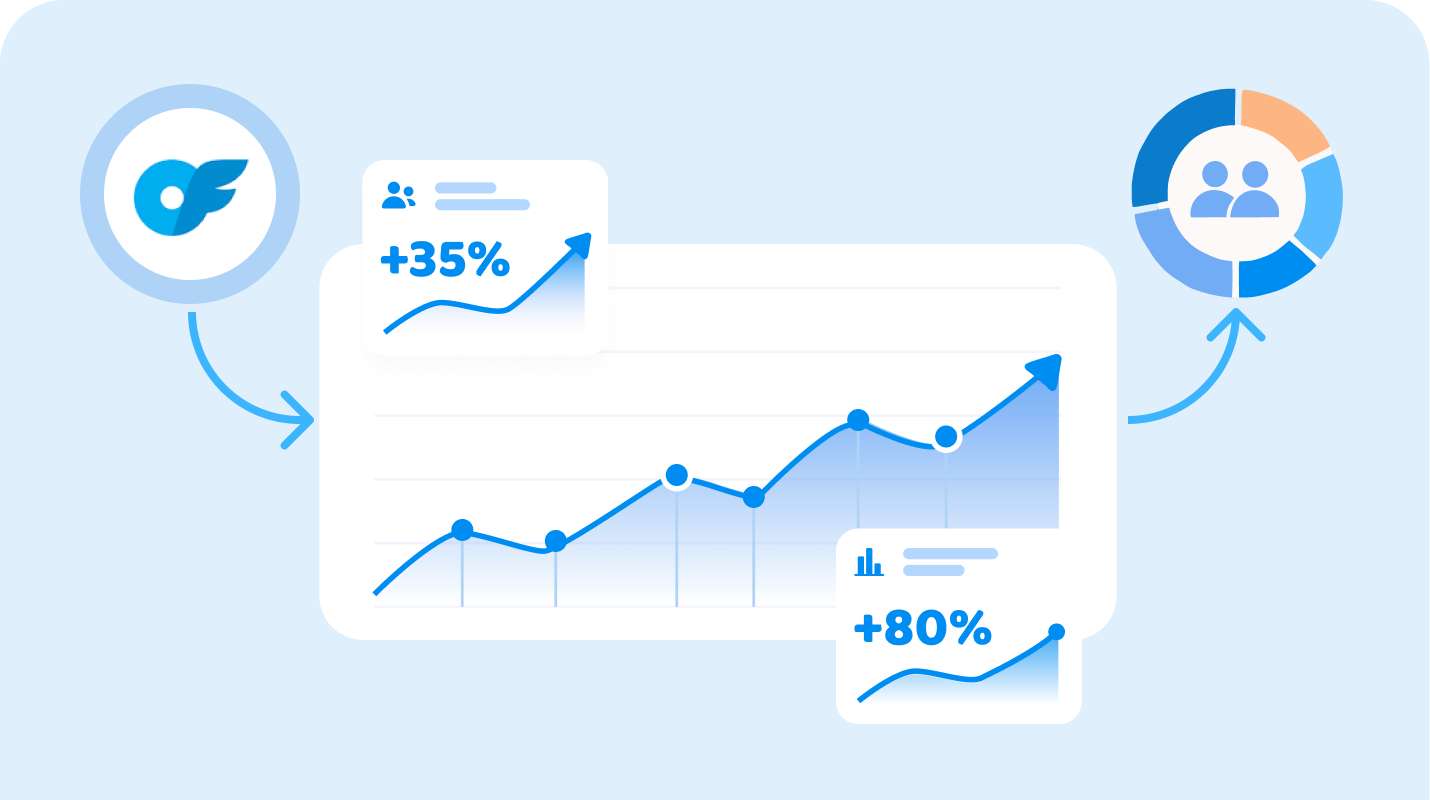
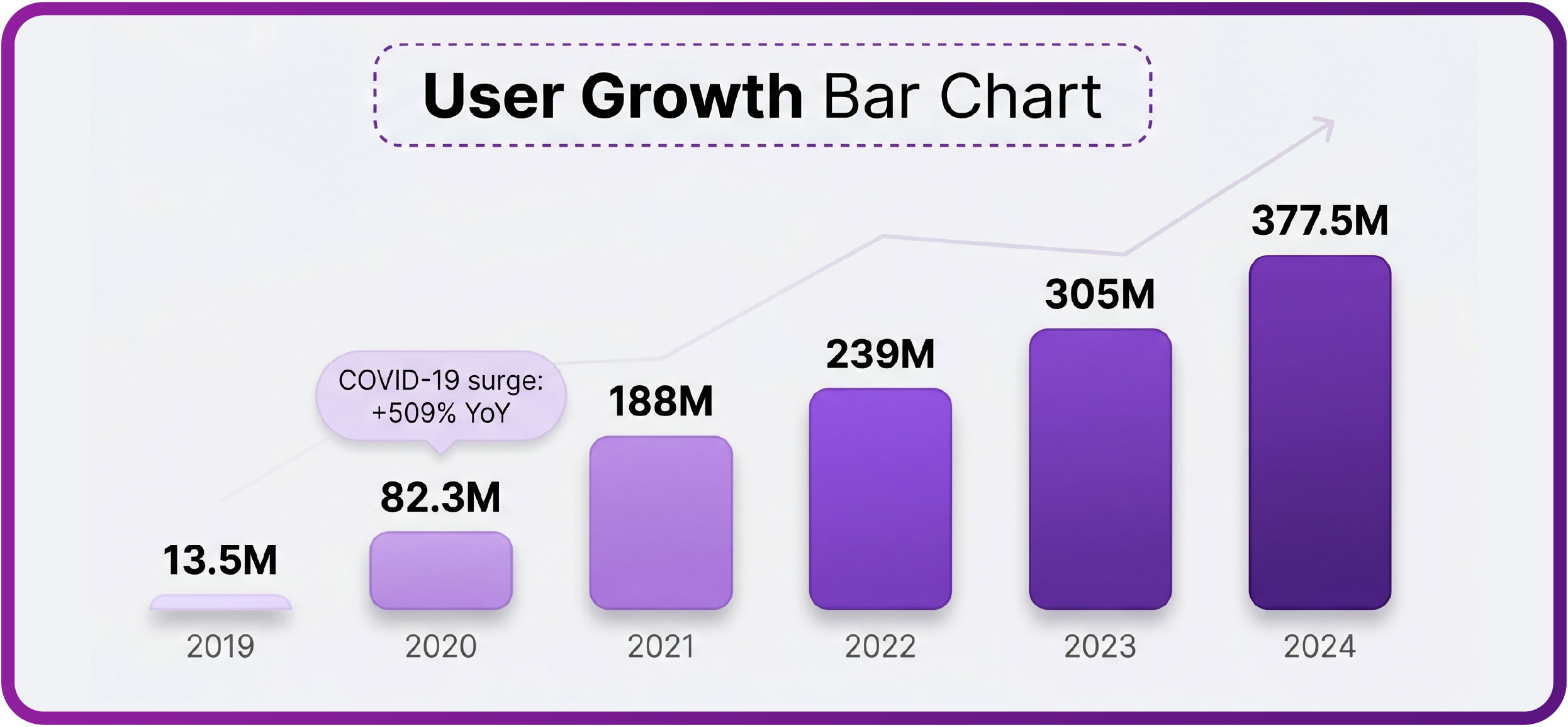
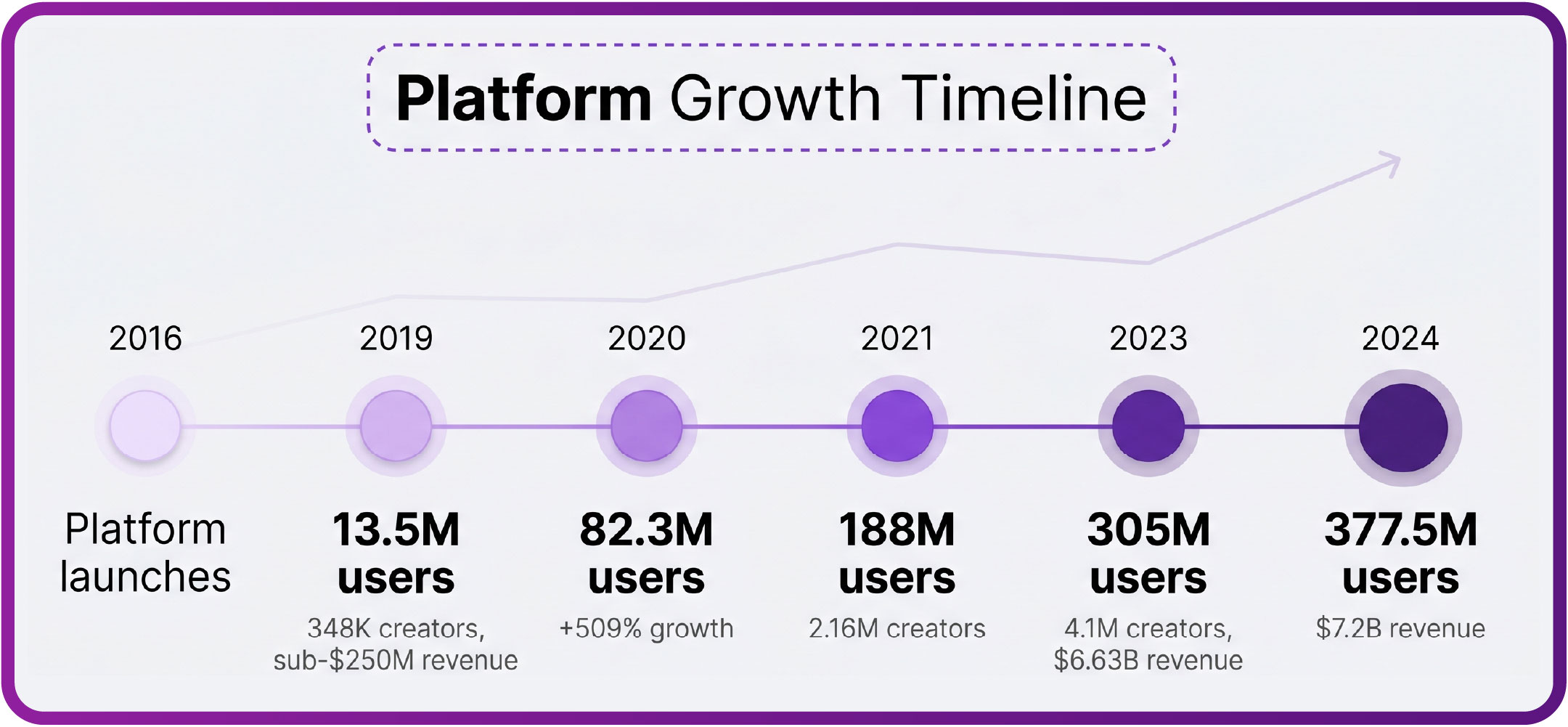
The platform growth chart above shows how quickly the user base expanded, especially around 2020. That surge brought legitimate creators and opportunists at the same time. This is why checking activity matters more than checking follower counts.
Verification steps
Cross-checking takes about five minutes. Start with the handle, then search that same handle on other platforms. A consistent presence across several networks is a reasonable sign of a real person or team.
Next, compare the visual style. Real creators build a recognisable look over time. Copied pages mix styles because the media comes from several sources. If the gallery looks like three different people, it probably is.
Finally, check whether the page is mentioned anywhere else. Independent mentions or ranking entries are not proof, but complete absence across the web is a meaningful gap for an account claiming a large audience.
- Following a link from the bio without checking where it leads.
- Assuming a high follower count means a verified identity.
- Paying for a full year before testing one month.
- Ignoring reverse image search results that show the same photos elsewhere.
- Trusting a page only because a search engine ranked it highly.
Readers who want a starting point can review the best onlyfans amateur listings, which group pages by activity and visible consistency rather than promotional claims.
Paid versus free risk
Free pages are not automatically safer. A free page sets its price to $0 and earns through pay-per-view messages and tips instead. That model can be legitimate, but it removes the small upfront filter a paid subscription provides. For a starting point, best onlyfans amateur collects free pages.
Promotional pages sit in between. They may charge a reduced first month and then return to a normal rate between $4.99 and $15. The risk is not the promotion itself but what happens after it ends.
| Page type | Typical price | Main risk | What to check |
|---|---|---|---|
| Free page | $0 | Pay-per-view pressure and tip requests | Whether messages have real value |
| Promo page | Reduced first month | Price jump after the promotion | The standard renewal rate |
| Standard paid tier | $4.99 to $15 | Inactive or copied content | Posting history and replies |
| Premium tier | Up to $49.99 | High cost with no added activity | Whether output matches the price |
One detail is often missed. When a creator raises the subscription price, auto-renew stops, and existing access lasts until the current paid period ends. That protects you from an unexpected charge. It also means a price change is a natural moment to review the page.
The timeline above shows how the platform expanded from 2016 onward. A longer history does not guarantee quality, but accounts with steady activity are easier to assess than brand-new profiles with no track record.
Privacy protection
Payment safety and identity safety are separate problems, and both deserve attention. Use a payment method you can monitor, and keep your display name different from the name on your card.
Turn on two-step authentication for your account. It takes a minute and prevents most unauthorised logins, especially if you reuse passwords elsewhere. If a page asks you to move the conversation to another app before you subscribe, treat that as a reason to pause.
- Use a separate email address that is not tied to your main identity.
- Enable two-step authentication before your first subscription.
- Keep the display name distinct from your real name.
- Review your active subscriptions once a month.
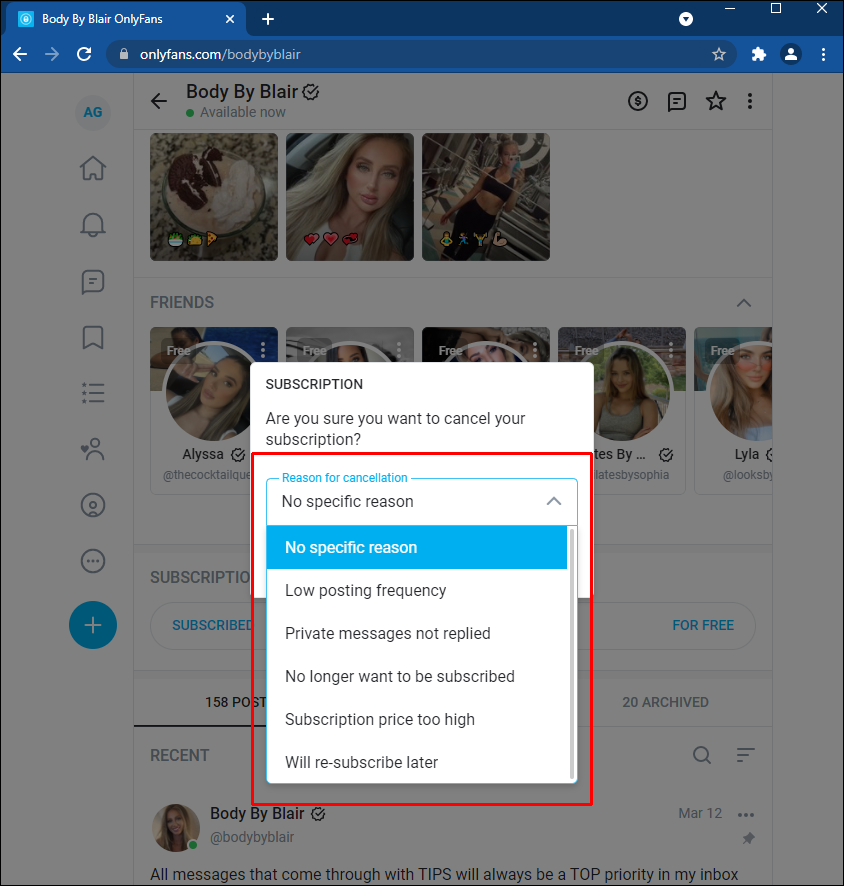
- Cancel through the platform rather than through a third party.
- Never share card details over direct messages.
Reporting and moving on
If a page turns out to be fake or inactive, report it and cancel. Reporting helps the platform remove copied accounts, and cancelling stops the next charge. Keep a short record of what you paid and when, in case a dispute is needed.
Then replace it rather than quitting the search. Ranking sites exist because the platform has no built-in discovery feed or directory. Use several sources, compare them, and favour pages that show consistent activity over ones that only show aggressive promotion.
Independent reviews add a second opinion. Neither rankings nor reviews replace your own check, but together they narrow the field quickly.
Platform limits
It helps to know what the platform does and does not confirm about the people who use it. Verification covers identity and payment details for the account holder, not the accuracy of every claim in a bio. BestOnlyFans keeps its rankings tied to visible activity.
| Item | Verified by the platform | Not verified |
|---|---|---|
| Account holder identity | Yes, through document checks | Whether the bio describes that person accurately |
| Payment details | Yes, for payouts | Whether every message is sent by the creator |
| Profile photos | No | Whether images are original or copied |
| Posting activity | No | Whether a page stays active after you subscribe |
| External links | No | Whether a linked account belongs to the same person |
That table explains why the checks in this article matter. The platform confirms who gets paid, not whether a page will keep posting. The rest is up to you and the signals you can see before paying. BestOnlyFans lists pages by observable signals, not by volume.
A final note on expectations: no method removes all risk, but careful checking reduces it. Reading the bio, testing one reply, and starting with a single month will catch most bad pages before they cost more than a few dollars. BestOnlyFans refreshes its rankings every month.
FAQ
Can a fake page appear on a ranking site?
Yes, rankings are not verification. Use them as a starting point, then confirm activity and links yourself before paying.
Is a free page safer than a paid one?
Not necessarily. Free pages earn through pay-per-view messages and tips, so the pressure simply moves from the subscription to individual unlocks.
What happens if a creator raises the price?
Auto-renew stops, and your existing access continues until the current paid period ends, so you are not charged the new rate automatically.
How long should I wait for a reply before moving on?
One day is a reasonable window for a simple question. Silence beyond that on an active page is a signal worth acting on.